Introduction
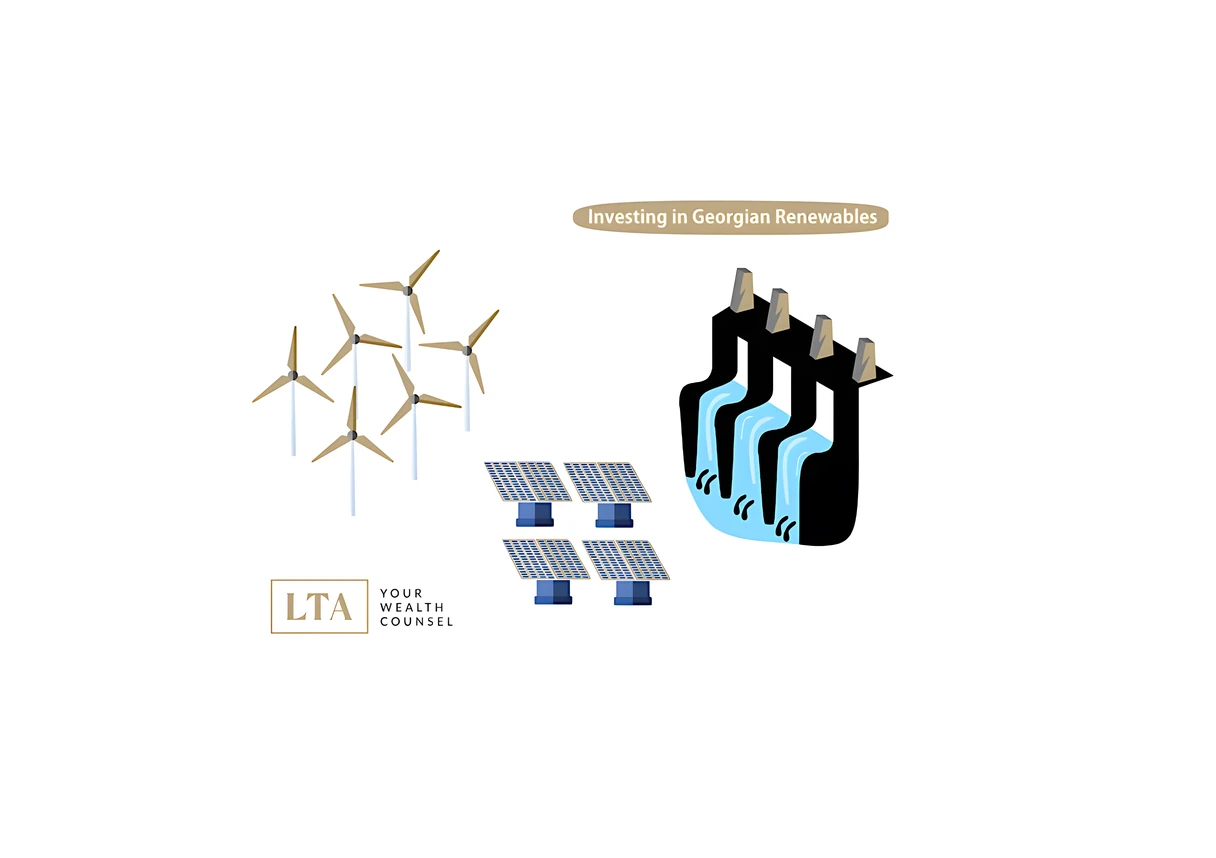
Renewable energy investments in Georgia represent the core way of Georgia to achieve its energy independence. Therefore, in order to meet the rapidly growing needs for energy in the country, the state is putting more and more emphasis on promoting renewable energy resources: hydro, solar and wind energies. For this purpose, a number of strategic documents have been developed, which aim to establish and develop tools to encourage and support the use of renewable energy sources.
This is also made clear by numerous reports of Georgian National Energy and Water Supply Regulatory Commission (GNERC). GNERC names policies for the exploitation of water, solar and wind renewable energy resources and, accordingly, updating the existing legal framework and bringing it closer to EU directives as main way to effectively use the electric energy resources in Georgia, to increase electric energy security and sustainability, as well as to fully meet the demand for electricity in the country.
It should be noted that the electricity sector is not monopolized by the state, thus - one of the most important mechanisms for utilization of renewable energy sources remains attraction of direct foreign investments in this sphere. Potential investors need to form a clear idea about the objects of investment, risks and support mechanisms, as well as the basics of legal regulation, which is what this article serves to.
Legislation for Renewable Energy Investments
There are a number of legislative or sub-legal normative acts that regulate the relations in the energy sector in Georgia. In this regard, first of all, it is worth noting that the Law of Georgia "On Energy and Water Supply" establishes the general legal framework for the production, transmission, distribution, and supply of electricity. It establishes the criteria and procedures related to tender announcement and authorization of energy activities, operation and commissioning of the electric energy system, public services in the electric energy sectors, consumer rights and their protection.
It is also worth noting the special law in the field of renewable energy investments. In particular, the Law of Georgia "On Encouraging the Production and Use of Energy from Renewable Sources", which creates the legal basis for promoting, encouraging and using energy from renewable sources. It also sets mandatory national targets for the total share of energy from renewable sources in total final energy consumption and energy transport. In addition, according to the mentioned law, renewable energy is defined as wind energy, solar energy, ocean energy, aerothermal energy, geothermal energy, hydrothermal energy, hydropower, biomass, gas obtained as a result of the decomposition of organic material at a landfill, gas generated in a wastewater treatment plant, biogas.
One of the most important laws regarding utilization of renewable energy sources and encouraging investments in green energy in country is the Law of Georgia "On Public and Private Cooperation". The mentioned law establishes the legal foundations of public and private cooperation, including the rules and procedures related to the development and implementation of the public and private cooperation project, the principles of public and private cooperation, the relevant institutional system, as well as other issues related to public and private cooperation.
Separately should be noted the Law of Georgia "On State Support for Investments", which provides special conditions and additional incentives to encourage investments of particular importance.
Statistical Data of Investments in Renewables
Electricity supply and consumption in Georgia are characterized by seasonality. Its electricity consumption is higher in winter than during the summer, while electricity supply – is higher in summer and less in winter. However, according to existing studies, this situation from 2031, is likely to change and Georgia will become country with most usage of electricity in summer. Accordingly, when electricity peak demand moves from the winter period to the summer period the renewable energy sources shall satisfy the increased demand. This once again emphasizes the importance of utilization of renewable energy sources in Georgia and its economic potential. That is why the full utilization of the resources available in the country in terms of renewable energy sources and its effective use is one of the main priorities of the state.
Based on the data indicated in the ten-year plan for the development of the transmission network of Georgia (2022-2032) developed by the State Electricity System of Georgia, the installed capacity of the Georgian energy system is 4564 MW, of which the capacity of conventional hydroelectric power plants is 2381 MW, the capacity of hydroelectric power plants working on flow - 973 MW, 110 MW - air turbines, 21 MW - of wind stations, and of combined and thermal power stations - 1079 MW. Thus, about 74% of the power comes from hydropower plants.
According to the same document, by 2032, the total capacity of Georgia will increase to 10,086 MW. Out of this, 4326 MW will be the capacity of conventional hydroelectric power stations, 3139 MW of run-of-river hydroelectric power plants, 760 MW of wind power plants, 171 MW of solar power plants, 110 MW of air turbines, and 1579 MW of new combined cycle thermal power plants.
According to the ten-year plan for the development of the transmission network of Georgia (2022-2032) developed by the State Electricity System of Georgia, the share of wind and solar power plants will be approximately 10% by 2032. The above volumes of wind and solar energy development take into account the projects planned for the current stage.
It is also noteworthy that according to the information published by GNERC, based on existing studies, the total estimated potential of wind resources in Georgia is 1,450 megawatts, and their average annual production potential is 4,160 mln kWh.

Electricity prices
Georgia's electricity prices in the region are higher than the corresponding figures only in Russia and Azerbaijan. 1 kWh of electricity is supplied to the consumer sector in Georgia for an average of GEL0.235. Consumer tariffs in the country are fully regulated and the population benefits from a tiered tariff, which, on one hand, helps to save energy and, on the other hand, carries a social burden.
Large electricity consumers trade in the wholesale energy market. Before the implementation of the Georgian Energy Exchange, the price for the mentioned consumers is determined on the basis of bilateral agreements. From July 1, 2024, it is planned to launch an energy exchange platform, where the wholesale price of electricity will be determined in accordance with the conditions of competition in the market.
It should be noted that in case of non-payment of electricity fees in Georgia, there is no so-called debit receivables. This is due to the fact that in case of non-payment for consumed electricity, the system operator is obliged to stop supplying electricity to the consumer.
Cross-border trade of electricity
The electrical system of Georgia has effective connections with all four neighboring states - Azerbaijan, Armenia, Turkey and Russia. Such infrastructural connectivity provides the country with the opportunity to generate significant revenues from cross-border trade. The State Electricity System of Georgia has published information that in 2016-2020, the electricity system of Georgia supplied 1350 GWh of electricity.
It is worth noting that the integration of the Georgian electricity system with the European single energy market is being actively discussed, which will give Georgia additional opportunities for electricity export. This makes the Georgian energy sector even more attractive for direct foreign investments.
The possibility of integrating variable renewable energy sources into the electric power system of Georgia
Based on existing studies, it can be said that Georgia has the greatest potential for utilization of wind, solar, geothermal and hydro resources. According to the National Renewable Energy Action Plan developed by the Ministry of Economy and Sustainable Development, for hydropower in Georgia, the potential total capacity is estimated at 15,000 MW, and the total annual generation potential at 50 TWh. About 22% of this potential is currently being used.
According to the same plan, the average annual wind power generation potential in Georgia is defined as 4 TWh and an installed capacity of 1,500 MW.
In addition, according to the hydro-geological research, the annual potential of geothermal waters of Georgia is 250 million m3. Today, there are more than 250 natural and artificial water deposits in Georgia, where the average temperature of geothermal water ranges from 30 to 110ºC, the total daily discharge is estimated at 160,000 m3.
It should be noted that, taking into account the geographical location of Georgia, the rate of solar radiation is relatively high. Some regions of the country are characterized by 250-280 sunny days per year, which is about 6,000-6,780 sunny hours per year. Annual solar radiation varies between 1,250-1,800 kWh/m2 depending on the specifics of the region.
According to the ten-year plan (2022-2032) for the development of the Georgian transmission network developed by the State Electricity System of Georgia, the possibility of integrating variable renewable energy sources into the Georgian energy system is not unlimited. In the mentioned plan, it is mentioned that by 2025 it is possible to integrate approximately 500 MW of wind and 250 MW of solar plants into the energy system of Georgia. In addition, by 2030, it is predicted to integrate 1332 MW of wind and 520 MW of solar plants (100% of potential).
In the near future, the efficient use of renewable energy sources may provide an additional 20 TWh of output, which provides the opportunity to save approximately 7 million tons of fossil fuels. This will give the country the opportunity to reduce greenhouse gas emissions in the atmosphere: namely, 9 million tons of CO2; 5,000 tons of CO and 44,000 tons of NO2. The full use of Georgia's renewable energy resources will significantly contribute to the climate change mitigation process in the country.
Existing support mechanisms
Mechanisms of energy production from renewable sources are provided by the "Support scheme for production and use of energy from renewable sources" approved by the Resolution N403 of the Government of Georgia of July 2, 2020. The mentioned document defines measures for the construction and operation of a power plant with an installed capacity of more than 5 megawatts working on renewable sources in Georgia by a private investor.
In each specific case, the support scheme is used taking into account two components. In particular, in this case it means the support period and the premium tariff.
The support period is determined for a period of ten years after the station's commissioning and production license is issued, for 8 months a year. The mentioned 8 months of the calendar year mean the following months: January, February, March, April, September, October, November and December.
According to the general regulation, the premium rate is 0.015 USD for 1 kWh. In addition, the premium tariff will be paid as an addition to the wholesale (equilibrium) price fixed for the relevant hour in the organized electricity market, only if the fixed wholesale (equilibrium) price for 1 kWh of electricity produced by the station in a given hour during the support period and sold in the organized electricity market is less than 0.055 USD. The mentioned decree also prescribes the currency of premium tariff payment. In particular, the premium tariff will be paid in the national currency of Georgia, at the rate determined by the National Bank of Georgia on the day of issuing the invoice, in accordance with the agreement.
It should be noted that the support mechanisms provided for in the aforementioned resolution are not exhaustive. According to the same resolution, in each specific case, with the decision of the Government of Georgia, taking into account the specificity or importance of the station, it is possible to develop different support conditions. The support scheme may include various types of investment support, tax exemptions or reductions, tax refunds and other renewable energy commitment support schemes.
The decree named for benefiting from the support scheme also defines a specific procedure. In particular, the entity interested in participating in the scheme submits an initiative offer to the Ministry of Economy and Sustainable Development of Georgia, which should not exceed the limits of the support period and premium tariff mentioned above. In case of making a positive decision after reviewing the mentioned initiative in accordance with the requirements of the rule provided by the legislation of Georgia an appropriate agreement is formed between the investor, the Government of Georgia and the wholesale public service organization.
JSC "Georgian Energy Development Fund" (GEDF) is created in order to implement energy projects and interest foreign investors. The main goal of the mentioned fund is to promote the development of prospective projects of renewable energy sources, to find potential investors and to interest them in existing projects. For example, the Kartli wind power plant project, which was successfully implemented by the mentioned fund, can be settled. GEDF implemented the Kartli wind farm project, which has a demonstration nature, and the success of the project significantly encouraged wind energy projects.

Licensing
According to the legislation of Georgia, the implementation of such activities, which include particularly important state or public interests or are related to the use of state resources, require permission or licensing from the state. One of these activities is the activity of electricity production. However, not all activities related to electricity production require a license.
In this regard, it should be noted that the energy legislation of Georgia distinguishes between micro and small power plants. The power plant whose design capacity does not exceed 15 MW is considered a small power plant. A micro power plant refers to an electricity production facility owned/used by an end user or a group of end users, which uses renewable energy sources, is connected to the electricity distribution network, and whose installed capacity does not exceed 500 kilowatts. In the case of such stations, the electricity production activity does not require licensing from Georgian National Energy and Water Supply Regulatory Commission. However, in relation to a small power plant, there is an obligation to notify Georgian National Energy and Water Supply Regulatory Commission about the start of activity.
Contrary to the above, if the design capacity of the power plant exceeds 15 MW, it is not a small or micro capacity power plant and it needs to obtain an appropriate license from Georgian National Energy and Water Supply Regulatory Commission. In order to obtain the mentioned license, it is necessary for the relevant interested enterprise to apply to the National Energy and Water Supply Regulatory Commission of Georgia. The application is considered and the relevant decision is made within a period of no more than three months.
It is also important to note that the legislation of Georgia provides for the so-called possibility of issuing a preliminary license as well. This is one of the important mechanisms for attracting investment and supporting investors in the field of energy. In particular, a preliminary license can be obtained before the relevant entity carries out the construction of the power plant and starts the electricity production activity.
Georgian National Energy and Water Supply Regulatory Commission also issues a preliminary license for electricity production. The aforementioned preliminary license gives the relevant entity the opportunity to carry out the relevant activity, provided that it meets the requirements stipulated by the preliminary license. In other words, in the case of a preliminary license, the relevant entity has certain obligations, upon fulfillment of which Georgian National Energy and Water Supply Regulatory Commission is obliged to issue a license for electricity production.
Taxes
Enterprises in the field of renewable energy are taxed in an ordinary way: 15% corporate tax and 5% dividend tax. It should be noted that corporate and dividend taxes are not paid annually in Georgia. Corporate tax is paid during following activities: distribution of profits; when paying such expenses or making other payments that are not related to economic activity; supply free-of-charge; in the case of representative expenses incurred in an amount greater than the threshold amount established by the tax legislation.
At the same time there are some important exemptions, which we will talk about below. However, at the same time, Georgia's international agreements should be taken into account. Plus to that - special conditions may be agreed for each specific project.
The provision of construction-installation, repair, restoration, test-construction and/or geological-exploration services financed by preferential credit issued by foreign states and/or international organizations in accordance with the international agreements of Georgia ratified by the Parliament of Georgia for the rehabilitation of the electric energy sector is exempted from VAT.
Also, the supply of electricity and guaranteed capacity is exempted from VAT, except for the supply of electricity provided by the Law of Georgia "On Energy and Water Supply" to the consumer who buys electricity for his own consumption, as well as the provision of transmission and/or dispatching services.
Another important VAT exemption applies to the import of such goods, which are financed by preferential credit issued by a foreign state and/or international organization in accordance with the international agreement of Georgia ratified by the Parliament of Georgia for the rehabilitation of the electric energy sector.
Export of electricity from Georgia (including export to free industrial zones) is allowed and not subject to VAT.
And finally, tax code provides special exemption for small plants. Micro-power plant's owner's income from supply of excessive electricity produced by the retail user to the distribution licensee is exempted from personal income tax.
The field of electric energy is characterized by many peculiarities in terms of accounting and taxes. We will not dive into these issues within the scope of this article.
Conclusion
To sum up, Georgia has a great potential in the direction of utilization of renewable energy sources. In this regard, the existing unexploited resources make the country very attractive in terms of attracting direct foreign investments. It should also be noted that Georgia has flexible regulations and various support schemes for attraction of investments.
Our law firm in Tbilisi is ready to assist with any type of renewable energy related project in Georgia. We have lawyers for renewable energy projects specializing on energy laws and possibilities to propose existing projects for purchase.
DISCLAIMER: This is not legal, tax or investment advice. Our opinion is not binding for any court or tax authorities. Any kind of investment bears risks.